Showing posts with label legislature. Show all posts

Friday, October 16, 2015

What's the difference between a proclamation, a resolution, and an act?

On Monday, Governor Walker issued a proclamation recognizing October 12, 2015 as Indigenous Peoples Day. There was much fanfare in the press about Alaska being the first state to reclaim Columbus Day for Native people. And then Anne Hillman of Alaska Public Media pointed this out:
So what is a proclamation? The governor can issue proclamations to recognize days, weeks, or months for a single year, often at the request of his constituents (Constituent Services Request web form). Governor Walker has issued nearly 100 of these, including Bear Awareness Month (March 2015), Auctioneers Day (April 18, 2015), and Archives Month (October 2015). You can see them all in the governor's news room. Some of the proclamations are required by Alaska statute, like Alaska Territorial Guard Day (October 18) or Dutch Harbor Remembrance Day (June 3). Proclamations can also be used to call special legislative sessions, like Governor Walker did on April 27.
The executive proclamation declaring that October 2015 is Archives Month.

Similarly, the Alaska state legislature can create awareness days, weeks, or months for the current or upcoming year through concurrent resolutions, which "reflect the will, wish, view or decision of both houses speaking concurrently," according to the Uniform Rules. In 2015, the legislature passed resolutions like Sexual Assault Awareness Month (April 2015), Alaska School Choice Week (January 24-30, 2016), and Congenital Diaphragmatic Hernia Action Day (April 19, 2015). Concurrent resolutions are easier to pass than bills. They don't require three readings, committee referrals, or the governor's signature; they only need to pass with a majority in each house.
Proclaiming April 2015 as Sexual Assault Awareness Month.
Resolutions like these are the legislature's way of recognizing a special day, week, or month for a single year.

In order to make one of these special designations stick, the legislature has to pass a bill that becomes part of the Alaska Statutes. These bills are subject to legislative procedures outlined in the Alaska Constitution, which is a more rigorous process than passing a concurrent resolution. In 2015, the legislature passed four of these acts: Alaska Law Enforcement Officers' Day (January 9), Great Alaska Good Friday Earthquake Remembrance Day (March 27), Alaska Firefighters' Day (the Sunday before October 9), and Children's Day (second Sunday in June). These will get added to the previously created special days in the Alaska Statutes, Title 44, Section 12.
Alaska Statutes from 2014 on the Library shelf
New observances get added to the Alaska Statutes once they pass the legislature and are recognized forever (or until the legislature votes to repeal them).

Thursday, May 7, 2015

Naming the SLAM

On Tuesday, Alaska Governor Bill Walker signed SB63, which officially names our new building, affectionately called the SLAM, after two great Alaskans. The building's formal name will be the Father Andrew P. Kashevaroff State Library, Archives, and Museum.

Governor Walker signing SB63 at the Alaska State Library Historical Collections. Behind him from left to right: legislative aide Bianca Carpeneti, Education & Early Development Commissioner Mike Hanley, Deputy Director of Libraries, Archives, and Museums Bob Banghart, Mayor Merrill Sanford, Representative Sam Kito III, Senator Dennis Egan, and legislative intern Heather Evoy.

From 1919 until his death in 1940, Father Kashevaroff served as the first curator and librarian of the Alaska Historical Museum and Library. Although the institution was created by an act of Congress in 1900, it didn't open its doors until 1920, and Father Kashevaroff personally greeted the visitors.

Reverend A.P. Kashevaroff standing outside the Alaska Historical Museum
P243-3-007

Father Kashevaroff was uniquely positioned to lead the fledgling institution. As a Russian Orthodox priest with Alaska Native heritage, Kashevaroff had a deep interest in Alaska's history and culture. His strong relationships with Alaska Native and Russian American communities allowed him to acquire the objects that form the foundation of the Alaska State Museum's collections and to advocate for the library and museum.

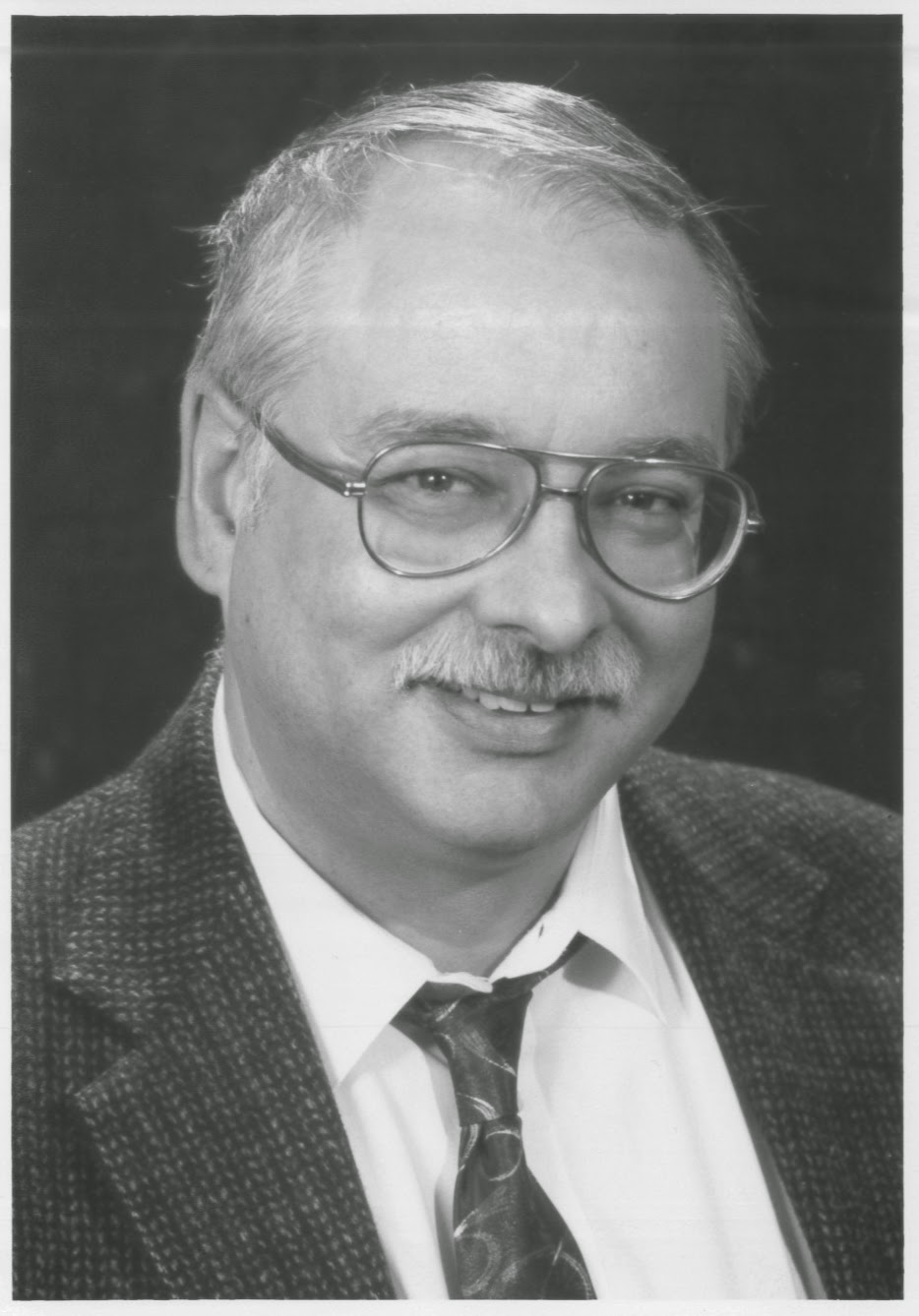
The Reading Room on the second floor will be named for Representative Richard Foster of Nome, who served in the Alaska legislature from 1989 until his death in 2009. Representative Foster was a Democrat who often caucused with the Republicans, and was well-known for crossing party lines to benefit his community. He was also a great user of the Alaska State Library, and would walk from the Capitol to the library and the archives to read newspapers and research Alaska's history.

Representative Richard Foster
Alaska State Library Historical Collections Portrait File


We look forward to opening the Father Andrew P. Kashevaroff State Library, Archives, and Museum and Representative Richard Foster Reading Room next spring. We'll be honored to work in a place bearing the names of these two men and we hope to see you there, helping us write the next chapter in the State Library, Archives, and Museum story.

More on the naming of SLAM:

Wednesday, April 1, 2009

Historic List of Alaska Legislators

Question: I heard about a list of Alaska State Legislators through history but cannot find it online. Can you help me?

Answer: The list is called the Roster of Members and is found on the Alaska State Legislature's publications page. You will find the link for the publication about halfway down on the righthand side. It includes information on the participants in the Alaska Constitutional Convention and Legislative member details from the first Territorial Legislature in 1913 through the 28th State Legislature for the 2013 and 2014 sessions.